

Prayer Guide
We pray for the trees, The Woods, Forest and Jungles. Call us afresh to tend and keep, Guard and protect, Until that day when We shall go out with joy and be led forth in peace, The mountains and hills shall burst into song, And the trees of the field shall clap their hands. Amen
Excerpt from prayer 20: Trees by Jon Swales.
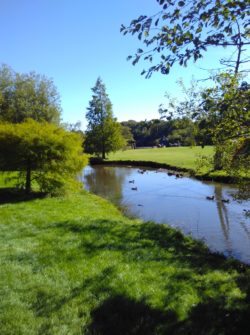
Scroll down for July's prayers, click the Today's Prayer button above or download them below.
To Subscribe:
1. Email Monthly Have an email sent to you at the end of each previous month announcing when the monthly guide is online.
2. Arrange to have emails sent approx. daily Email for daily prayers/meditations
Older prayer guides: Prayer Guide Archive
July 2026 downloads: Small print Doc Small Pdf Large print Doc Large Pdf
Thursday 25th June
Eastern monarch butterfly’s comeback, with populations rising by 64%, offers cautious hope for a species still facing habitat loss and climate threats, writes Bente Baekers. After years of decline, eastern monarch butterflies are making a comeback, offering a hopeful update for one of North America’s most iconic species. A new survey from WWF-Mexico and its partners found that eastern monarch butterflies occupied 7.24 acres of forest in central Mexico during the 2025–2026 overwintering season. That marks a 64% increase from the previous year, when they covered 4.42 acres. Scientists measure monarch populations not by counting individual butterflies, but by the area of forest they cover while clustered together. Even small increases in acreage can represent millions more butterflies returning to their winter habitat.
https://happyeconews.com/eastern-monarch-butterflys-comeback-in-mexico/
Friday 26th June
Taps could run dry unless the British Government takes action to shore up England’s water supply amid the growing threat of droughts, a group of peers have warned. Journalist Rebecca Speare-Cole continues: The country’s water system is facing compounding pressures from climate change, population growth, public water supply leakage and water intensive industries, the House of Lords Environment and Climate Change Committee said. The cross party group said Britain is not short of rain but must better store, manage and reuse water to prevent both drought and flooding as the impacts of global warming escalate, in a report published last week. As part of this, they said ministers should encourage people to reuse water and harvest rainwater, launch awareness campaigns and improve water efficiency standards in homes as part of a whole society approach to balancing supply and demand.
https://theecologist.org/2026/may/26/thirst-case-scenario-climate
Saturday 27th June
Solar power is on the rise around the world as the cost of solar panels goes down and societal acceptance of the technology rises. The world added record-breaking solar power installations in 2025, and capacity is expected to more than double in the next five years, according to the International Energy Agency. But there’s one inescapable issue darkening the skies for the transition to clean solar energy: dirty coal plants. Researchers in the UK have found that pollution from coal is significantly reducing the amount of power we could be getting from solar panels. From 2017 to 2023, annual solar energy losses “from existing systems were, on average, equivalent to one-third of the energy added by new PV installations,” the researchers write in a paper published in the journal Nature Sustainability. When power plant furnaces burn coal, it releases not just carbon dioxide but also sulfur dioxide. This gas reacts with other molecules to become small particles called sulfates. Called aerosols, these tiny particles get suspended in the air and reflect sunlight.
https://www.anthropocenemagazine.org/2026/05/coal-plants-are-dimming-the-worlds-solar-panels/
Sunday 28th June
Lord Jesus,
the earth is yours and you have commanded the winds and the sea;
help us to leave behind our consumer demand for plastics and move towards behaviours that are environmentally healthy;
help us to follow your lead in caring for the world you love.
Amen.
Prayer by the Rt Revd David Urquhart, Former Bishop of Birmingham
https://www.churchofengland.org/prayer-and-worship/topical-prayers/prayers-world-environment-day
Monday 29th June
Uncertainty and disruption are now defining characteristics of the global economy. At the same time, the tangible impacts of climate change are increasingly being felt across the world, meaning reaching net-zero is more important than ever. Yet against this backdrop of geopolitical instability, rising energy costs, and political change, questions are being raised about the cost of the transition, the commitment of businesses to sustainability and how they can efficiently turn ambition into action. To better understand this picture, BSI undertook the G7 net-zero temperature check; consulting more than 7,000 business leaders across seven countries on their attitudes to, drivers of and barriers to progress on net-zero… 83% of leaders said they were committed to achieving net-zero by their national target date and 69% had increased their investment in the last 12 months. This appears to be driven largely by the need for operational efficiencies and commercial gains;.. Beyond the commercial drivers, it’s also positive that business leaders appear to see net-zero action as having long-term benefits. They perceive decarbonisation as necessary for their business’ future, with three quarters saying maintaining momentum on net-zero is important (76%) and the same proportion saying that these efforts are necessary for business resilience. However, there are signs of some pain points. While nearly two fifths (38%) expect to increase their investment in net-zero in the next year, how and where they invest in net-zero appears to be changing. https://www.edie.net/net-zero-is-still-a-tangible-goal-but-businesses-are-climate-coding-the-conversation-and-looking-for-guidance/
Tuesday 30th June
Hundreds of scientists in dozens of institutions are embarking on the next phase of the world’s largest coordinated climate-modelling effort. Climate-modelling groups use supercomputers to run climate models that simulate the physics, chemistry and biology of the Earth’s atmosphere, land and oceans. These models play a crucial role in helping scientists understand how the climate is responding as greenhouse gases build up in the atmosphere. For four decades, the Coupled Model Intercomparison Project (CMIP) has guided the work of the climate-modelling community by providing a framework that allows for millions of results to be collected together and compared. The resulting projections are used extensively in climate science and policy and underpin the landmark reports of the Intergovernmental Panel on Climate Change (IPCC). Now, the seventh phase of CMIP – CMIP7 – is underway, with more than 30 climate-modelling centres expected to contribute more than five million gigabytes of data – so much that downloading it using a fast internet connection would take two and a half years.
https://www.carbonbrief.org/guest-post-how-cmip7-will-shape-the-next-wave-of-climate-science/
Wednesday 1st July
Join with many other Christians from around the world with the monthly Pray and Fast for the Climate Movement on the first of each month. Prayer points for July will be on their website.
Also today at 7pm is a Green Christian workshop on community energy. Led by Dr Matt Vickers, the new Chief Executive Officer of Community Energy England (CEE), the national voice for community energy. They want a thriving community energy sector, integrated into and powering a fair, zero-carbon energy system. Come to the workshop to find out why this is a pivotal moment for the UK energy system and for the role of community energy within it.
https://greenchristian.org.uk/community-energy-green-christian-workshop/
https://prayandfastfortheclimate.org.uk/resources/
Thursday 2nd July
Solar has overtaken gas power in Asia to become the continent’s third-largest source of electricity, according to new analysis by Carbon Brief. The rapid expansion of solar power in nations such as China, India and Pakistan has seen its annual output increase nearly fourfold since 2020. Asia accounts for around 60% of the world’s solar-power growth in this period, putting the continent at the heart of the global solar boom. Coal and hydropower remain Asia’s largest sources of electricity, generating roughly 52% and 12% of the continent’s power each year, respectively. Yet despite expectations that gas power would undergo “explosive growth” in the region, output has stalled due to supply disruptions, relatively high gas prices and growth in clean alternatives. In contrast, solar has surged, generating some 1,727 terawatt hours (TWh) of electricity in the 12 months to April 2026.
https://www.carbonbrief.org/analysis-solar-overtakes-gas-power-in-asia-for-first-time-ever/
Friday 3rd July
Starmer’s climate legacy: What changed for net-zero during his premiership? asks Sidhi Mittal. Labour entered government on 5 July 2024 after defeating Rishi Sunak’s Conservatives, inheriting a policy landscape of U-turns and backtracking on the UK’s net-zero agenda. Internationally, governments have been grappling with inflation, geopolitical instability, energy market volatility and growing political opposition to climate action in several major economies. Against that backdrop, Starmer’s Government sought to recast climate policy through the lens of economic growth, energy security and energy independence. Under Energy Security and Net Zero Secretary Ed Miliband, clean power became one of Labour’s defining priorities, with ministers arguing that reducing reliance on imported fossil fuels would strengthen both the economy and national resilience. The Government also introduced wide-ranging reforms spanning industrial strategy, infrastructure, planning, energy and nature. Supporters argue the measures restored momentum to the UK’s climate ambitions and helped position Britain as a leading destination for clean energy investment. Critics, however, contend that progress was uneven, with concerns over the pace of delivery and the weakening of environmental protections in some areas.
https://www.edie.net/starmers-climate-legacy-what-changed-for-net-zero-during-his-premiership/
Saturday 4th July
As human Ebola cases climb in DRC, critically endangered gorillas are at risk, writes Kayleigh Long. Gorillas are vulnerable to communicable diseases that infect humans and other nonhuman primates, including the Ebola virus. A new Ebola outbreak was announced in the Democratic Republic of Congo in mid-May, but so far, there have been no reported cases of gorilla infection. Previous outbreaks have devastated western lowland gorillas. Armed conflict hampers both conservation and efforts to monitor both Grauer’s and mountain gorilla populations in DRC. They also impair the public health response, which has also been seriously impacted by cuts in U.S. funding under the Trump administration. Gorillas are highly social animals, which facilitates spread of infectious disease. Infants and females are disproportionately affected, which has serious consequences for recovery of devastated populations.
Sunday 5th July
Father of Creation, God and Father of our Lord Jesus Christ, You created a world of wonder, You declared it to be good. The world was formless and void, And you spoke and breathed life into being. On the third day, you made trees. You declared them to be good. And we declare them to be good. For our lives are inexplicably linked with theirs. For deciduous and evergreens, We give thanks, A stunning array of designs That sustain life.
Excerpt from prayer 20: Trees by Jon Swales.
https://greenchristian.org.uk/lament-hope-40-prayers-for-the-climate-and-ecological-emergency/
Monday 6th July
The first carbon credits issued under the Paris Agreement’s Article 6.4 mechanism are facing scrutiny over alleged links to institutions controlled by Myanmar’s military junta, writes Puja Das. A report by the Myanmar Policy Institute, Global Forest Coalition and Plan 1.5 has raised concerns over human rights, governance, monitoring and emissions accounting. The cookstove project became the first in the world to issue credits under Article 6.4 in February 2026. The groups allege the project may have significantly overstated its climate benefits and have called for further issuance, transfer and use of the credits to be suspended. The controversy comes as governments meet in Bonn for UN climate talks [last month], where the future of Article 6 carbon markets remains under discussion.
Tuesday 7th July
The High-level Political Forum on Sustainable Development (HLPF) will be convened from Tuesday, 7 July, to Wednesday, 15 July in New York, under the auspices of the Economic and Social Council (ECOSOC). The HLPF is the UN's main platform for reviewing and following up on the 2030 Agenda and the Sustainable Development Goals (SDGs). The theme of the HLPF will be “Transformative, equitable, innovative and coordinated actions for the 2030 Agenda for Sustainable Development and its Sustainable Development Goals for a sustainable future for all”. Five of the Sustainable Development Goals (SDGs) will have an in depth review during this year’s HLPF.
Wednesday 8th July
The first Sustainable Development Goal to be looked at in depth this week is SDG6 – Clean Water and Sanitation. Despite some progress, billions of people still lack access to drinking water, sanitation and hygiene. Water use efficiency, although increasing globally, remains low in most countries, and water stress continues to be severe in several regions of the world. The implementation of integrated water resources management is advancing slowly, with transboundary water cooperation remaining limited despite the large number of countries sharing water resources. Achieving Goal 6 requires global commitment to ensure water security for all while protecting the planet’s water resources. .... The United Nations System-wide Strategy for Water and Sanitation is focused on governance frameworks, financial resources, data, technology and innovative tools for Goal 6 and supporting preparations for the 2026 United Nations Water Conference to Accelerate the Implementation of Sustainable Development Goal 6: Ensure availability and sustainable management of water and sanitation for all.
https://sdgs.un.org/goals/goal6#progress_and_info
Thursday 9th July
Sustainable Development Goal 7 is Affordable and Clean Energy. Progress towards Goal 7 has been notable: from 2015 to 2023, global electricity access rose from 87 to 92 per cent, access to clean cooking fuels increased by 16 per cent, and renewable electricity continued to grow. However, progress is slowing –renewables lag in the transport and heating sectors, and energy efficiency gains have stalled. Moreover, only a small portion of global energy investment reaches the areas most in need. Achieving Goal 7 will require a significant boost in investment in emerging and developing economies, in particular in sub-Saharan Africa, to expand access to electricity and clean cooking, scale up renewable energy, improve energy efficiency and strengthen policy and regulatory frameworks.
https://sdgs.un.org/goals/goal7#progress_and_info
Friday 10th July
The next SDG to be looked at in depth this week is SDG 9 – Industry, Innovation and Infrastructure. Since 2015, notable progress has been made in expanding infrastructure, fostering industrial growth and boosting innovation. However, stark regional disparities persist, and many developing countries continue to face systemic barriers to inclusive and sustainable industrialization. To advance Goal 9, countries must boost investment in resilient infrastructure and research and development, expand access to finance for small manufacturers and bridge the digital divide by prioritizing affordable broadband and innovation systems in the world’s most underserved regions. The United Nations is advancing digital inclusion through initiatives such as the Technology Bank for the Least Developed Countries and the Global Digital Compact, which is aimed at closing connectivity gaps, expanding access to innovation and ensuring digital transformation benefits.
https://sdgs.un.org/goals/goal9#progress_and_info
Saturday 11th July
Sustainable Development Goal 11 is Sustainable Cities and Communities. Urbanization continues to accelerate, with more than half the global population now living in cities, projected to be nearly 70 per cent by 2050. However, cities face mounting challenges, including rising urban poverty, growing slum populations, inadequate public transport and threats to infrastructure from disasters. To advance Goal 11, cities need integrated strategies focused on affordable and inclusive housing, participatory urban planning, heritage preservation and stronger local governance, all supported by robust disaggregated data. Initiatives aimed at accelerating progress on Goal 11 include the Local2030 Coalition, which drives action on the Goals at the local level by bringing together United Nations entities, local governments and other partners.
https://sdgs.un.org/goals/goal11#progress_and_info
Sunday 12th July
Fruit trees & Fig trees, Ash and Aspen, Willow and Walnut, Cyprus and Cedar, We declare them to be good. O Lord, our Lord, how majestic is your name in all the earth. The Giant Redwood, The Monkey Puzzle, The Peppermint tree, Praise your name, Through root, trunk, branch and leaves. O Lord, our Lord, how majestic is your name in all the earth. The Sweetbay Magnolia, The Coconut Palm, The flowering Dogwood, Praise your name, Through root, trunk, branch and leaves.
Excerpt from prayer 20: Trees by Jon Swales.
https://greenchristian.org.uk/lament-hope-40-prayers-for-the-climate-and-ecological-emergency/
Monday 13th July
The final Sustainable Development Goal to be looked at in depth this week is SDG 17 – Partnerships for the Goals. Global progress on Goal 17 has shown both advancement and persistent challenges over the past decade. While financial flows to developing countries have increased, driven by both official and private finance, record-high debt servicing costs in 2023 strain low- and middle-income economies. This is compounded by a $4 trillion annual investment gap for Goal achievement in developing countries. Access to information and communications technology has grown steadily, although digital divides remain stark, in particular in lower-income regions. While data systems and national statistical capacities have improved, many countries still struggle to secure the necessary funding to fully track and implement the Goals, slowing progress in key areas. Strengthened support and renewed global cooperation are critical to bridge these divides and accelerate Goal progress.
https://sdgs.un.org/goals/goal17#progress_and_info
Tuesday 14th July
Thirty six countries will present their Voluntary National Reviews at the 2026 HLPF in New York this week... [They] are voluntary, state-led, undertaken by both developed and developing countries, and involve multiple stakeholders. VNRs facilitate sharing of experiences, including successes, challenges and lessons learned, to accelerate the implementation of the 2030 Agenda. They also seek to strengthen policies and institutions of governments, and to mobilize multi-stakeholder support and partnerships for the implementation of the SDGs.
Wednesday 15th July
At 7pm tonight Green Christian has an online talk by Fr Martin Poulsom on Exploring “Magnifica Humanitas”. In May this year Pope Leo XIV addressed all people of goodwill in his first encyclical letter Magnifica Humanitas. He offered a powerful analysis of how principles rooted in the innate dignity of every person can guide us in this time of challenging technological and social change. Fr Martin Poulsom will explore the ways in which the letter speaks to us in the context of the climate and nature crisis. Fr Martin Poulsom is a Roman Catholic priest, a Salesian of Don Bosco, a religious order specialising in youth ministry. He is a Senior Lecturer in Theology at the University of Roehampton, and specialises in theology of creation. He is interested in the encounter between science and faith. Martin combines the theoretical focus of his research and teaching work with various forms of practical action in Justice, Peace and the Integrity of Creation, and is a trustee of climate charity Operation Noah. Free, but register to receive the zoom link.
https://greenchristian.org.uk/exploring-magnifica-humanitas-green-christian-talk/
Thursday 16th July
Last month saw the annual climate talks in Bonn. After two weeks of climate negotiations riven by arguments over finance and science, the UN climate chief expressed disappointment and denounced governments for “cherry-picking” commitments they have already made and waiting for others to move first, writes Joe Lo et al. In their final hours [last month], the talks tried - and failed - to reach a deal that would have balanced developing countries’ demands for reassurance on finance to help them adapt to climate impacts with richer nations’ desire to move forward with work on speeding up emissions reductions in line with science. Simon Stiell, the head of the UN climate body, released a statement as the Bonn talks wound up, saying that “in some negotiating rooms, we’ve heard a familiar tendency towards you-first-ism - groups refusing to deliver commitments or allow the process to move forward unless others go first. This is a recipe for gridlock when we need all negotiating tracks to be moving in the fast lane,”. Gridlock is where the talks ended, with countries unable to agree conclusions on at least three major areas of climate action, including adaptation and mitigation, invoking “Rule 16”. That means they will be taken up again at COP31 in Türkiye in November.
Friday 17th July
Despite many countries expressing disappointment at the end of Bonn, China argued that some common ground had been found that could serve as positive elements to build on at COP31, including that “no one is against mitigation implementation and ambition”. Small island states and developing nations spoke bitterly of the lack of progress on the global goal on adaptation, which had been expected to launch technical work on putting into practice indicators agreed at COP30 in Brazil, and said it had destroyed trust between countries. Negotiations on the goal ended in deadlock after developed countries, including European governments refused to include a target to triple adaptation finance by 2035 that was agreed at COP30 in Brazil, insisting the text should focus on technical work to measure progress on making people more resilient to climate pressures. This was a red line for many vulnerable countries, especially the African group.
Saturday 18th July
One key topic that advanced more calmly at the Bonn talks and even achieved some promising consensus was just transition - how to achieve a green economic and social shift that is fair from the global to the local level. Countries approved the terms of reference under which the just transition work programme (JTWP), which began in 2023, will be reviewed. And following up on a COP30 decision to develop a mechanism to guide and enable support for just transition initiatives, which was hailed by civil society as a big win, countries in Bonn provided a first set of options on its structure and other elements of how it will operate, with a view to it being launched at COP31.
Sunday 19th July
Father of Creation, God of Compassion, We have moved East of Eden, We are Homesick Exiles, Creation groans, The Tree of Life is no more. We have opened the door to the sin of ecological violence, And it has overwhelmed us. Through the greed of exploitation, Slash and Burn, Over Consumption Unrestrained Capitalism has unleashed hell against Forests, Woods and Jungles. Father of Creation, God of Compassion, We have sinned and done evil in your sight. As unrestrained capitalism, fed by consumerism and profiteering, Plunders and Pillages, Ransacks and Rapes The Woods, Forests and Jungles.
Excerpt from prayer 20: Trees by Jon Swales.
https://greenchristian.org.uk/lament-hope-40-prayers-for-the-climate-and-ecological-emergency/
Monday 20th July
The UN Environment Programme (UNEP) and Bloomberg Philanthropies today announced efforts to help countries raise their response rate to major methane leaks around the world to 80 percent by 2030, ensuring that the causes of emissions seen from space are investigated and put on a path to mitigation. To date, only 10 early moving countries have achieved an 80 percent response rate. The announcement follows UN Secretary-General António Guterres’ call for urgent action to scale up methane mitigation, which underscores the importance of rapid reductions this decade across major emitting sectors – the fossil fuel sector offers the fastest and most cost-effective opportunity for cuts. “Carbon dioxide remains the principal driver of long-term warming. But it is also time to prioritize the cutting of methane,” said António Guterres, United Nations Secretary-General. “Aggressive cuts could produce visible temperature relief within a generation. UNEP’s Methane Alert and Response System has issued more than 5,000 alerts across 33 countries.”
Tuesday 21st July
The UK Government has announced proposals for new legislation that will require businesses to ensure that their supply chains are not linked to illegal deforestation, writes Sidhi Mittal. The plans were first announced in 2021 as part of the Environment Act. After a five-year delay, the first set of proposals has finally been published. Under the proposals, UK businesses that trade in commodities sourced from rainforests such as soy, palm oil, cocoa and rubber will need to guarantee that their imported products are not linked to illegal deforestation and land clearing. The Government has said that it will consult businesses, civil society and international partners later this year on the details of the proposed deforestation policy. The legislation is likely to build on the Environment Act, which targets illegal deforestation, and the existing UK Timber Regulation… In 2023, the UK’s consumption of goods was associated with approximately 29,000 hectares of deforestation worldwide – around one and a half times the size of Manchester – and 9.4 million tonnes of related carbon emissions. The new rules will aim to help deliver on the UK’s commitment under the Glasgow Leaders’ Declaration on Forests and Land Use, agreed at COP26, to halt and reverse forest loss and land degradation by 2030
Wednesday 22nd July
China’s provincial-level governments have now all published their 15th five-year plans – economic and social development blueprints for 2026-2030, writes Lekai Liu. These provincial plans reaffirm the overall trajectory of China’s energy transition, but reveal regional differences, based on economic and geographic considerations. Provincial plans are a critical mechanism for showing how high-level targets from the central government will be translated into action. For example, binding indicators set at national level include reductions in carbon intensity – carbon dioxide (CO2) emissions per unit of economic output – and the proportion of non-fossil energy in total consumption. Subsequent targets are then set for each province and tied to the performance evaluations of top local officials, who are ultimately responsible for delivery… At the broad level, the new provincial plans follow China’s overarching climate goals. All 31 provincial-level jurisdictions in mainland China have pledged to peak carbon emissions before 2030. Every plan also mentions the core elements of China’s energy transition strategy, including solar, wind, hydrogen, energy storage and upgrading the power grid. While solar features in every plan, specific interests in the technology vary from province to province.
Thursday 23rd July
Przewalski’s horse reintroduction in China surpassed 900 individuals, one-third of the global population, marking 40 years since the Wild Horse Return Program began restoring the world’s only remaining wild horse species from extinction, writes Cyrene Oraya Reyes. The milestone follows decades of conservation work transforming the “living fossil,” with a 60-million-year evolutionary history, from zoo specimens into wild herds galloping across the steppes and deserts of northwestern China. The Przewalski’s horse reintroduction program launched in 1985, following the species’ declaration as extinct in the wild in the 1970s due to poaching, habitat loss, and ecological degradation, which eliminated populations from their native range… China responded by establishing breeding bases in Xinjiang Uygur Autonomous Region and Gansu Province.
https://happyeconews.com/przewalskis-horse-reintroduction-in-china/
Friday 24th July
A UN study found that data centres consumed more electricity than all but 10 countries in 2025, writes Ruth Wright. United Nations Secretary-General António Guterres has told AI firms to "come clean" about their environmental footprint, underlining how fossil fuels are driving climate and energy crises. As Europe bakes under a second heatwave in as many months, Guterres delivered a speech in London that painted a stark picture of a planet that has just endured its 11 hottest years on record… Guterres specifically called on artificial intelligence companies to release information about the carbon pollution they create, along with the water and land used to power their operations. Guterres, whose term as Secretary-General ends on 31st December 2026, proposed the AI Environmental Transparency Initiative, arguing AI companies should measure and disclose the impact of their increasingly in-demand technology - impact which has been cited by opponents as reasons to curb the rapid growth of data centres.
Saturday 25th July
Swiss train manufacturer Stadler and Sardinian transport operator ARST are officially planning the development of the world’s first hydrogen-powered train built specifically for narrow-gauge lines, writes Mrigakshi Dixit. Notably, the introduction of 10 hydrogen trains in Sardinia will cut over 2,100 tonnes of CO2 per year compared to diesel trains (equivalent to roughly 450 car trips around the globe)… Italy’s regional narrow-gauge railways have long used diesel power due to a geographic trap: their tight curves and strict weight limits have made modern, heavy electric trains impractical. However, that era is ending now with the arrival of specialized, lightweight hydrogen technology designed to navigate these restrictive, scenic tracks without fossil fuels… The hydrogen fueling these trains will be manufactured locally using 100 percent solar power. This creates a completely closed-loop clean energy system. The train network will emit nothing but water vapor.
https://interestingengineering.com/transportation/world-first-narrow-gauge-hydrogen-train
Sunday 26th July
Father of Creation, God of Compassion, We remember your son nailed to a tree, Whose blood poured out on the wood of the cross, To remind us of self-giving sacrificial love. In his glorious resurrection, we are offered hope, And called to a new way of being, A Priestly calling to tend and keep. Father of Creation, God of Compassion, You have not abandoned us, But are working through us and in us to bring your kingdom. A kingdom of Justice and Peace, A kingdom in which is to be found, A tree for the healing of the nations. We pray for the trees, The Woods, Forest and Jungles. Call us afresh to tend and keep, Guard and protect, Until that day when We shall go out with joy and be led forth in peace, The mountains and hills shall burst into song, And the trees of the field shall clap their hands. Amen
Excerpt from prayer 20: Trees by Jon Swales.
https://greenchristian.org.uk/lament-hope-40-prayers-for-the-climate-and-ecological-emergency/
Monday 27th July
Climate change is often framed as a technological, policy, or economic challenge, writes Nazwa WB Salim. Yet beneath all of these lies a less visible but equally consequential reality: climate change is also a literacy challenge. The success of the global sustainability transition will depend not only on the solutions we develop but on our collective ability to understand, evaluate, and implement them. Around the world, governments, businesses, educators, and communities are making decisions that will shape energy systems, infrastructure, economies, public health, and societal resilience for decades to come. Yet these decisions are often made amid misinformation, fragmented knowledge, and unequal access to credible learning opportunities. When people lack the knowledge and capacity to navigate complex sustainability challenges, even the most ambitious climate policies and technological innovations can fall short of their potential. Climate literacy is therefore more than an educational objective; it is a climate justice imperative.
Tuesday 28th July
The Amazon accounts for more than half of all rural conflicts in Brazil today, writes Angela Mendes. Regions such as Amacro - which encompasses parts of Acre, Amazonas and Rondônia - are emerging as new hotspots of violence, where economic expansion advances hand in hand with land grabbing, deforestation and murder. In international public debate, war and the environment are still largely treated as separate issues. On one side are armed conflicts, humanitarian crises and geopolitical disputes. On the other are deforestation, climate change and threats against environmental defenders. This separation, however, no longer reflects reality. In the Amazon, these dimensions overlap. Environmental destruction is not merely a consequence — it is part of an active process of territorial dispute, economic control and the exercise of power.
https://theecologist.org/2026/jun/19/war-amazon
Wednesday 29th July
Global forecasters say a strong El Niño weather pattern is increasingly likely to develop in the second half of the year, boosting temperatures, disrupting rainfall and posing risks to crops the world over, write Marcelo Teixeira and May Angel. El Niño is a periodic warming of sea surface temperatures in the eastern Pacific caused by weakening trade winds. It occurs naturally every two to seven years and tends to last between nine and 12 months. The weather pattern typically results in warmer temperatures across the globe, drought in regions including South and Southeast Asia, Australia and Southern Africa, and heavy rainfall in others including the southern parts of South America and the United States. The U.S. National Oceanic and Atmospheric Administration declared the arrival of El Niño last week. Moreover, it said the weather pattern is likely to intensify, with a 63% probability of a very strong or "super El Niño" heading into 2027.
Thursday 30th July
Thawing permafrost is considered a growing source of greenhouse gases as our climate warms and releases ancient carbon once stored in the frozen soils. But a new study reveals an overlooked plus side: the process will also trigger a removal of emissions from the atmosphere as the landscape thaws. The research, published in the journal Nature, shows that rock weathering increasingly counteracts river CO2 emissions, as permafrost degrades. Rivers may develop a capacity to remove CO2 through intensified rock weathering. Researchers found that warming and permafrost degradation expose reactive minerals and increase water–rock interactions, accelerating chemical weathering processes that consume CO2. In some river catchments, this geological carbon uptake is partially or even fully offsetting river CO2 emissions. The research team from Umeå University in Sweden and East China Normal University investigated 50 rivers across the Qinghai–Tibet Plateau to understand how thawing permafrost reshapes carbon cycling. Outside of polar regions, the Plateau in southwestern China is Earth’s largest high-altitude cryosphere (areas with snow or ice year round).
https://www.goodnewsnetwork.org/thawing-permafrost-not-only-emits-co2-it-absorbs-it/
Friday 31st July
From the Eurasian steppes and the grasslands of South America to the savannas of Southern Africa, drought, climate change and unsustainable land use are placing growing pressure on the world’s rangelands — with up to half already degraded or at risk — threatening food systems, water security, biodiversity, livelihoods and the resilience of communities worldwide, the United Nations Convention to Combat Desertification (UNCCD) warned in June on this year’s Desertification and Drought Day… Evidence from multiple regions also shows that healthy rangelands are often more resilient to drought due to their perennial vegetation and deep root systems, which help retain water and protect soils during prolonged dry periods. Rangelands and pastoralists will be in focus at the forthcoming seventeenth session of the Conference of the Parties to the UNCCD (COP17), which will take place in Ulaanbaatar, Mongolia, [next month]. COP17 is expected to help advance international cooperation on sustainable land management, drought resilience and land restoration finance as countries intensify efforts to address desertification, land degradation and drought worldwide.
Sources:
Text and links compiled by Emma King. Links accessed June 25th 2026.
Since December 2017 we've not been distributing the Prayer Guide as a copy except under very special circumstances. (We encourage people to print out the Prayer-guide themselves and put it in their local churches.) If you think your circumstances qualify as very special please contact the webeditor
To have the Green Christian prayer guide emailed to you (free), please complete this on-line form